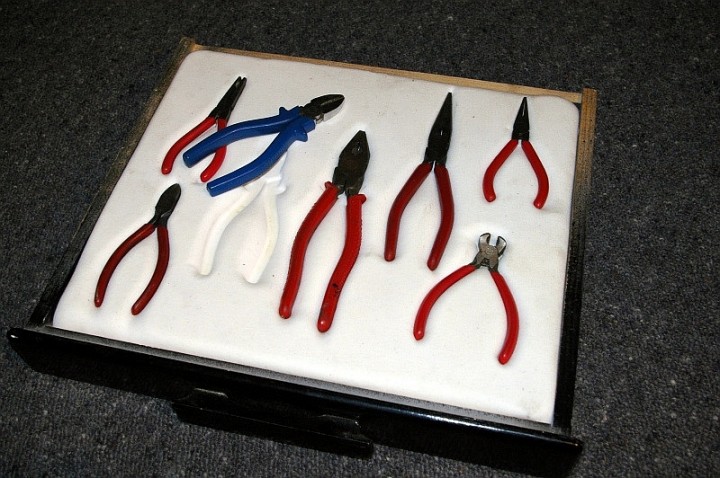
I saw this on MadModder.com and thought it was a brilliant idea. So I asked John Hill, also known as The Artful Bodger, for permission to republish it here. MadModder is one of my favorite forums and if you visit the discussion about John’s idea you’ll be able to learn more and see a beautiful storage case someone made using it. — Rob (Chief floor sweeper and editor)
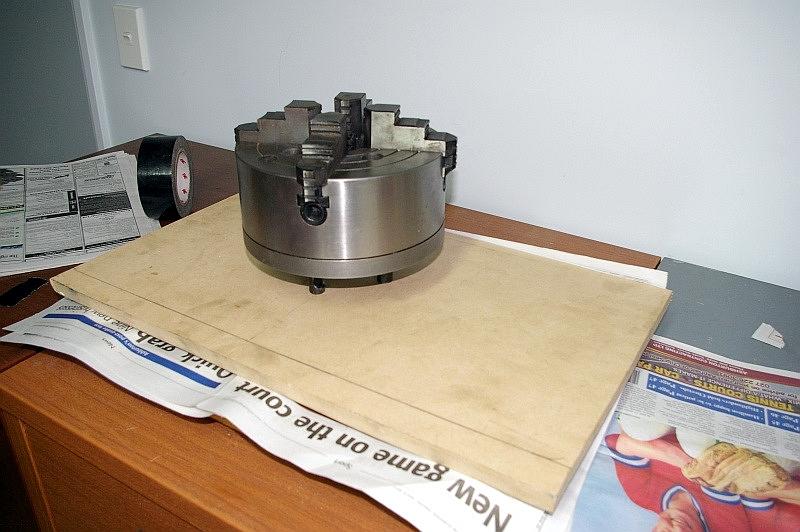
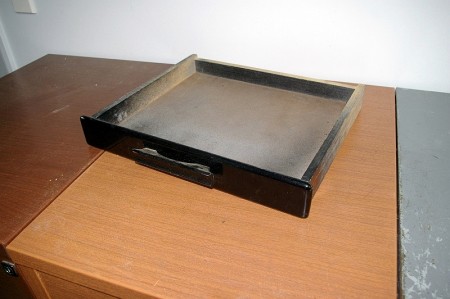 Start with one of these
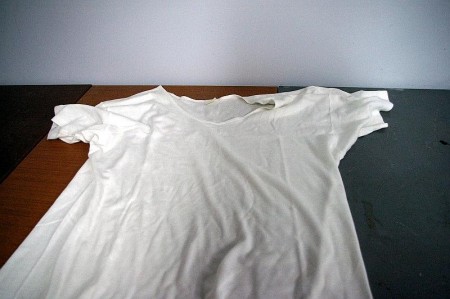 …and one of these…
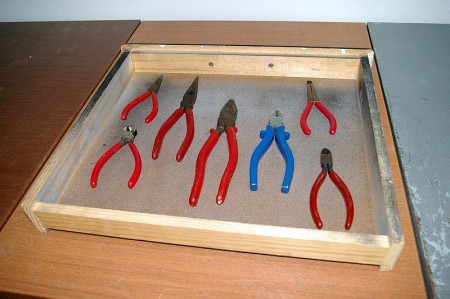 …some of your treasured tools and instruments..
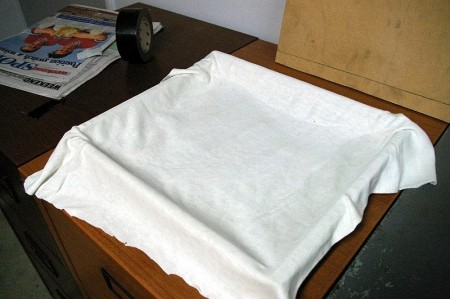 …covered with a bit of cloth from the t-shirt..
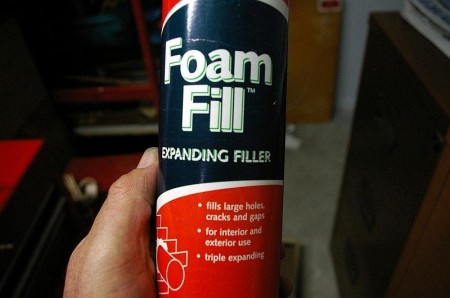 …shake up a can of this…
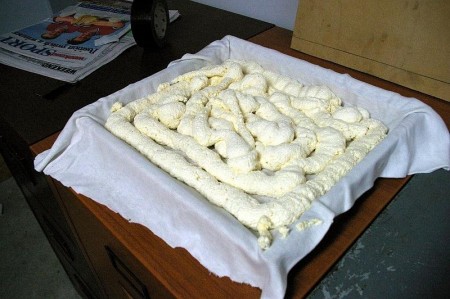 …lay it on them..
 …lay some newspaper over it…
 …pat it down and squish it around to fill any voids…
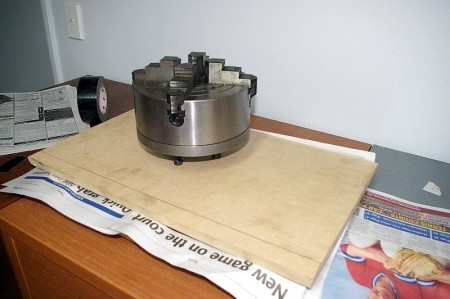 …get a good night’s sleep and in the morning..
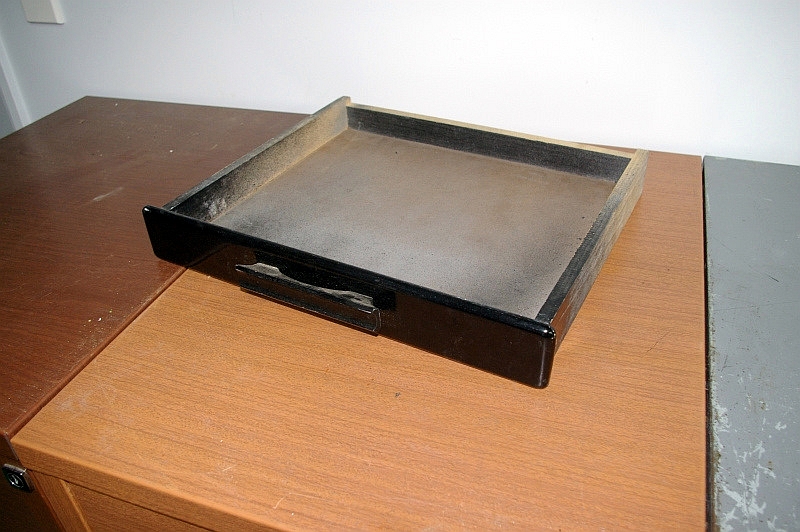 Start with one of these
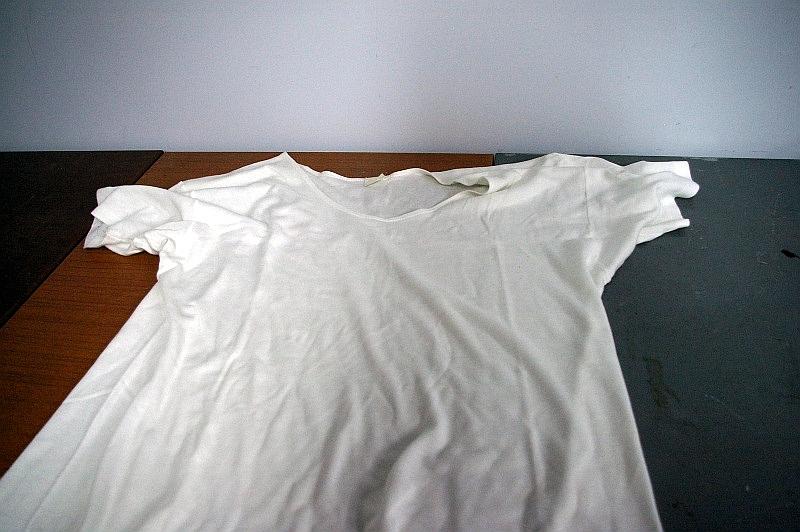 …and one of these…
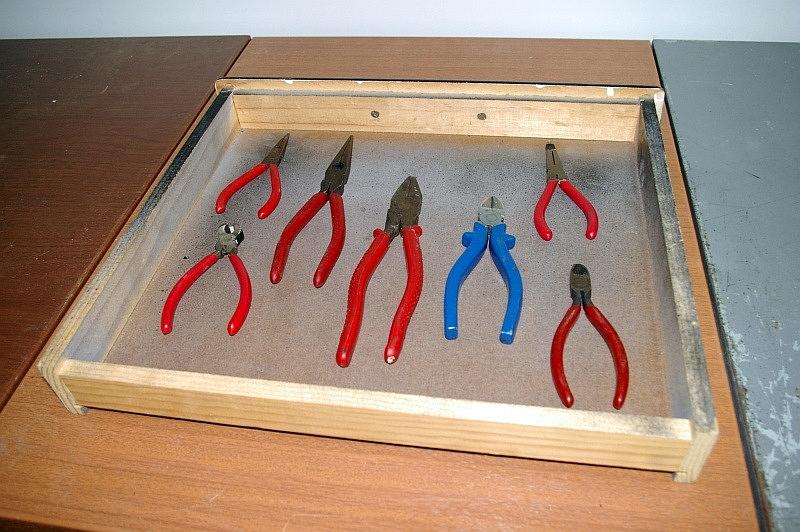 …some of your treasured tools and instruments..
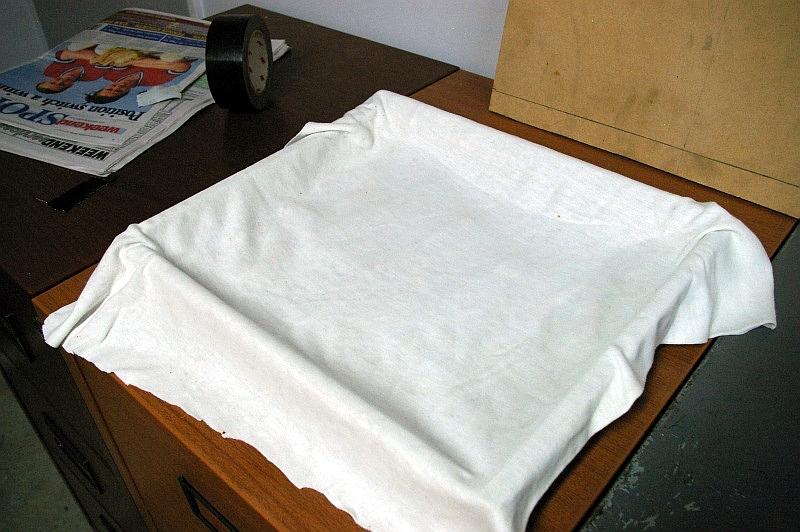 …covered with a bit of cloth from the t-shirt..
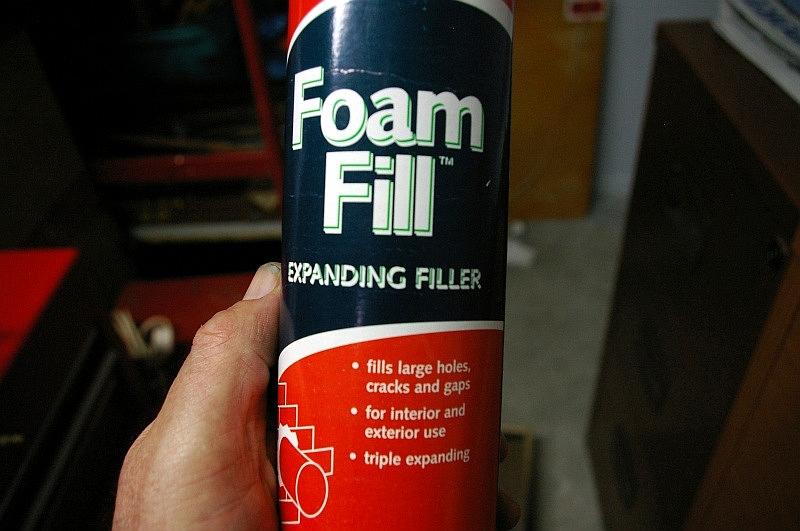 …shake up a can of this…
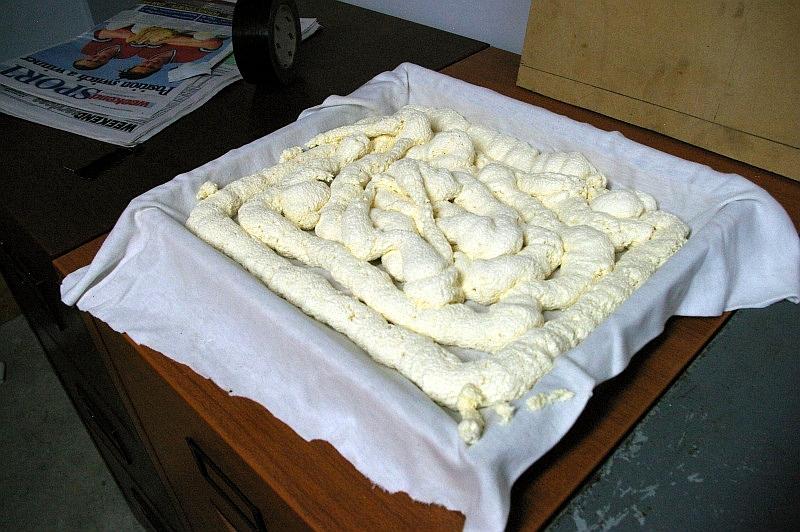 …lay it on them..
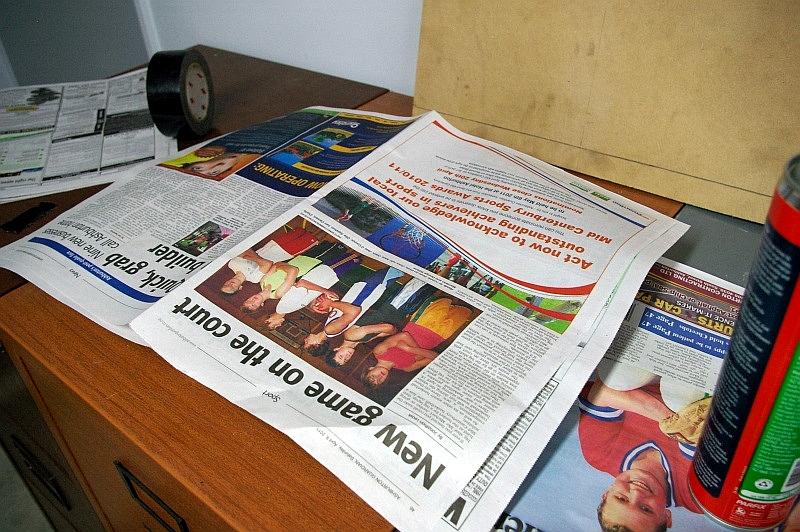 …lay some newspaper over it…
 …pat it down and squish it around to fill any voids…
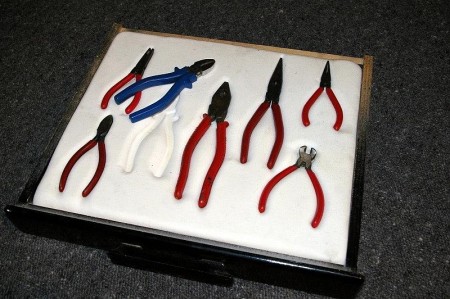
 …get a good night’s sleep and in the morning..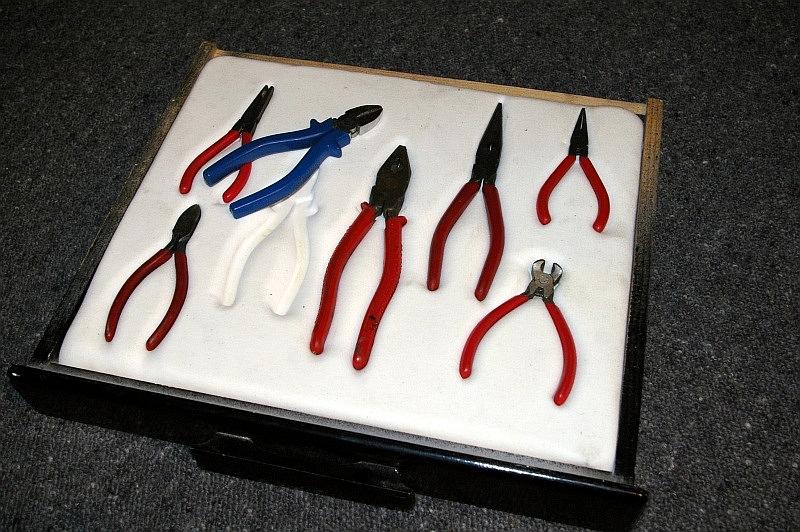
Very cool idea! Here’s an addendum to make it easier to get the tools out when you want to use them: take a couple of lumps of plasticine clay for each tool, about 3/4 to 1 inch in diameter, and mold them over an edge of the tool down to form a mushroom-cap-shaped dome on your molding surface. Remove the clay after the foam has set up. This will leave a recess on the top side to get your finger under the tool to help get it out. Best to use white clay so as not to stain the white T-shirt.
Great ideia!
This is a great idea and the result looks awesome.
Did you need to square off the foam at all after it set up?
Also I’m surprised the foam doesn’t bond to the t-shirt.
The foam, of course, does bond to the tee shirt, so that the top surface is nice soft fabric and not crunchy foam! My only change would be to use a black teeshirt so that grease from the tools doesn’t mark up the cloth surface.
Great idea! I will be doing this!
… you must not have very many tools, so much wasted space!
No, I have quite a few tools, but I also have a lot of storage space!
How do you think this would go with electronics. I have audio gear I’d like to have safe cases for. I wouldn’t want the roan bleeding through the fabric and getting on the equipment. Perhaps a layer of cling film around the equipment during the molding process?
I love that you use a milling chuck head as a weight
Not everyone would want to do this for their pliers or screwdrivers but this is great for protecting delicate tools like micrometers and dial gauges. You can use the same technique with wooden boxes, either custom built or repurposed jewelry boxes and such, along with velvet or similar cloth to produce really beautiful cases for all sorts of items. I built a friend a box for an antique dueling pistol like this.
Also, lots of tools like sockets sets, etc. come in a metal box with a thin, plastic molded tray to hold the tools. That plastic soon cracks and breaks with any use of the tools. As soon as you get the set, pull out the tools and flip over the plastic tray. Put it back in the metal box face-side down, fill the back of the tray with foam and let dry. (If you don’t put it back in the box, the expanding foam may distort the sides of the plastic tray.) Use a hack-saw blade to remove extra foam and flatten the back if necessary and flip the tray back over. It’ll be much more durable and even if the plastic cracks it’ll still hold the tools in place.
This would be great for my guitar effects and camera….
Based on the stuff that’s in the expanding foam, I’d really be concerned about the long-term damage that the outgassing from the foam could do to the tools. I’d use this idea for everyday/run-of-the-mill tools, no problem.
But when it comes to precision, fine finish, or antique tools, I’d be really cautious… might be safer/easier to trace tool outlines on some pre-cut stock and use a router to hollow out the voids to place the tools in.
I flipping love this idea! I actually wanted to do a custom case for some of my testers that I want to protect. (Esp the one with a big breakable knob…lol) I will be sharing this with my readers on my site as well. Thank you for posting this.
I did something similar, but with ordinary foam, I like your idea better, so will redo this;
http://i237.photobucket.com/albums/ff121/inoutbox/Temimages/case.jpg
using your method and see what it comes out like.
Thanks for the idea.
Hang on this was done by John Hill over at http://madmodder.net/index.php?topic=4770.0
Who is this Rob? that machinistblog and lifehacker are crediting?
Shipped two engine heads across the nation (3300 miles) using something like this. Put them in a garbage bag in a box, filled the box with foam, let set overnight and shipped the next day. Customer said no damage even after shipping with UPS.
Transmitthis, read the text. Under the first photo, Rob (owner of this site) gives credit to John Hill, and there’s a link to the original post. He also asked permission to post it.
I’d like to hear more about the outgassing that Rob mentioned above. Would this have any effect on things with lacquer finishes? I’m thinking specifically of brass musical instruments, which have lacquer finish.
This is incredible!
I just got a new toolbox this weekend to spread out the tools a bit.
I’ll have to give this a shot.
Both my boxes are the roll-around type, but with the t-shirt protective layer, I see no reason this shouldn’t work swimmingly!
@Rob
“But when it comes to precision, fine finish, or antique tools, I’d be really cautious… might be safer/easier to trace tool outlines on some pre-cut stock and use a router to hollow out the voids to place the tools in.”
I don’t think out-gassing would be that detrimental to most things. The gas in common urethane spray foams is usually some kind of fluorocarbon. That puts it into a category with spray can duster.
At any rate the federal regulations on building material require that the manufacturer put all chemical components on the label even if they aren’t capable of producing harm. Armed with that a bit of research could put your mind to rest or give justification.
The only thing I’d be concerned about is oil based paints. Basically, things made from petroleum products where a fluorocarbon could act as a solvent over time. Everything else (especially organic like wood) would much more quickly react with oxygen than a fluorocarbon. May even act as a preservative.
Regarding outgasing, I suggested this for tools, if you want to use it for optical devices (for example) I suggest you check on the composition of the foam. The foam I used is water curing polyurethane with a hydrocarbon propellant to get it out of the can.
What about using for a bug-out kit that has a pistol, clip(s), knife, radios, etc?
What do you think about making a computer case from this do you think the gas form the foam would harm the computer or any other electronics?
great stuff… but i’m a bit confused- what happens to the tshirt in the end? is the last photo showing the tshirt wrapped around the foam filler and turned around to fit inside the drawer? or did i miss something?
Ummmmm….. the t-shirt is bonded to the foam filler and forms the top surface once you turn the block over.
John
make a video
That is a great idea! Thanks for sharing the tip. Much better and easier than wetting and freezing foam like suitcase-style toolcases.
I’m no chemist, but would be surprised if the gases hurt anything.
Sorry for reviving such an old thread/post, but I just got my first box(brand new Craftsman top and bottom chest, limited edition, flat black :] ) and am looking for an easy, clean way to organize my tools. This idea is awesome, but after reading online, I hear a lot of people saying that the expanding foam stuff can bend and warp whatever surrounds it, and that’s the last thing I want after having spent $400 on my first box. Instead, I was looking at the DAP foam, which doesn’t get quite as hard, stays spongy. Any comments appreciated!
Yes, there is a bit of pressure on whatever surrounds the foam while it sets, if you are worried you could knock up a wooden tray the same size to do the moulding in. However the amount of pressure is really dependant upon the weight you put on the foam, you will see I used a lathe chuck as my weight.
I am sorry but I dont know anything about DAP foam.
Fine Idea
Aw, this was a really nice post. In thought I would like to put in writing like this additionally – taking time and actual effort to make an excellent article… however what can I say… I procrastinate alot and by no means seem to get one thing done.
I haven’t seen ‘FOAM FILL’ in stores, I’ve seen ‘Great Stuff’ filler. Is it the same?
Jay
Jay, “Foam Fil”l is the same as “Great Stuff” filler. It’s an expanding foam. Great stuff comes in a variety of strengths, so I think I would use the lighter to medium strength for a project like the pliers. Good luck.
I enjoyed reading this thread. I would imagine you could also use aluminium foil or similar. I like the idea of adding a plasticine finger sized blob to each piece too. Do the tools fit snugly enough for the foam blocks to be mounted vertically without the tools falling out? I just imagined making a series of blocks that could be tiled together on a wall to hold tools, instruments, etc.
question: Have you ever had the foam leak through the t-shirt fabric. Can you use other cottons? We are looking to make molded boxes for the knives my husband to be is making.
Hi Heather
I am sure you could use other fabrics but I dont know which as the t-shirt is the only one I have tried. You should experiment a little.
John
Flannel might be a good option. I tried felt, but it was a little too thick and wrinkled quite a bit. In any case, you want to use a fabric that is a close knit to avoid leak through.
how do i register on the site?
cheers
Ha ha, your (commercial product, link deleted) is more mess than my idea which is no mess at all!
Hi Guys, Im a new woodworking gal and I like this idea. My husband bought me a new tool box and Id like to made my own framing to fit my tool box and use black felt, will that work ok? I love the organization to my tools. thanks so much.
New timmer!
Felt, unless it’s really thin, will wrinkle. Spoils the look a little. The ‘stretchier’ the fabric, the better.
great idea. Thank you for this page.
I know this is an old thread but I just wanted to add for anyone that is worried about the expanding foam putting too much pressure on the tools or sides of whatever box, tray, or container is used they do make spray foam for filling gaps next to windows and doors that is made not to expand any further then the area its contained in so it does not bow the window or door frame. I dont see why that would not work perfectly for those worried about it.
I like this, gives me an idea for building a multi-draw tool storage.
I am very stupid spammer, thank you for this Easily make cozy storage for your delicate tools and instruments.